Closed Systems
closed systems
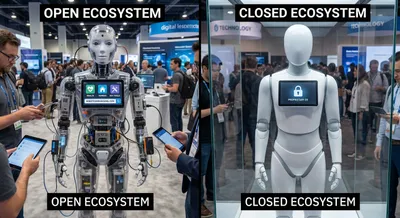
Open vs Closed Ecosystems: Extensibility and Third-Party Apps on 2026 Humanoids
This article compares open vs closed platforms in 2026 humanoids. We look at API access, plug-in frameworks, hardware interfaces, and simulation...
Closed Systems
Closed systems are products or platforms where the hardware designs, software source code, and extension mechanisms are controlled tightly by a single company. In these systems, third parties usually cannot access internal designs or change core software, and integrations are limited to what the company allows. Manufacturers often provide end-to-end control of updates, apps and accessories so the experience stays predictable and consistent. Closed systems matter because they offer clear advantages in ease of use, polished user experiences, and coordinated support—companies can optimize every part of the product to work together. That makes them attractive for businesses that need reliable performance, single-point support, and guaranteed compatibility from a vendor. However, the downsides include less flexibility, higher risk of vendor lock-in, and slower adoption of external innovations since third parties have limited access. Customers may find it hard to customize or extend functionality beyond what the provider offers, and switching to a different provider can be expensive. Security and quality can be strong when a company controls everything, but they also depend on that company's priorities and how quickly it responds to problems. Understanding whether a solution is closed helps buyers weigh trade-offs between convenience and control, and decide which approach fits their needs and future plans.
Never Miss a Robot Breakdown
Get deep research, head-to-head robot comparisons, and industry analysis delivered straight to your inbox — multiple times a week, completely free.