Robot Simulation
robot simulation
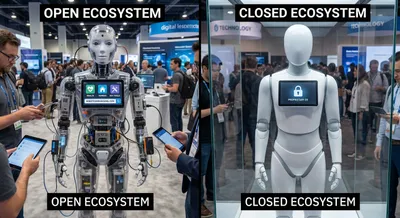
Open vs Closed Ecosystems: Extensibility and Third-Party Apps on 2026 Humanoids
This article compares open vs closed platforms in 2026 humanoids. We look at API access, plug-in frameworks, hardware interfaces, and simulation...
Robot Simulation
Robot simulation is the practice of creating virtual models of robots and their environments to test how they will behave before using real machines. These simulations use physics engines to mimic movement, collisions, sensors, and interactions so developers can run experiments safely and quickly. They let teams design and refine hardware and software, try out control strategies, and catch mistakes without risking damage or injury. Because virtual tests are faster and cheaper than building many physical prototypes, simulations speed up development and lower costs. Simulations are also useful for training machine learning systems and operators, providing reproducible scenarios that can be repeated millions of times. Digital models can mirror real-world conditions closely, but there is always a gap between simulation and reality that must be managed. Engineers reduce that gap by improving the fidelity of models, collecting real sensor data, and gradually validating results on actual robots. Good simulation tools include visualizers, debugging aids, and interfaces that connect to the same software used on real robots, making transition smoother. While not a complete substitute for real-world testing, virtual simulation is a powerful step that makes robotics development faster, safer, and more accessible.
Never Miss a Robot Breakdown
Get deep research, head-to-head robot comparisons, and industry analysis delivered straight to your inbox — multiple times a week, completely free.