Lessons from Early Adopters: Case Studies of 2026 Humanoid Pilots and Production
Lessons from Early Adopters: Case Studies of 2026 Humanoid Pilots and Production
The year 2026 is seeing humanoid robots move from sci-fi demos into real work settings. A humanoid robot is a machine built to look and act somewhat like a person – it walks on two legs and has arms and hands. Early trials are happening in places like warehouses, factories, stores, and even hospitals. These pilots report key performance metrics (KPIs) and feedback from people working with the bots. Below we review what went well, what broke, and how teams fixed problems. We also note how long training takes, how hard it was to add robots into the workflow, and what new buyers should watch out for.
Logistics: Warehouse and Delivery Robots
One of the first places humanoid robots are used is in logistics (warehouses and shipping centers). For example, Time magazine reports that Agility Robotics’ Digit robots are already working in a GXO warehouse and even in Amazon fulfillment centers (time.com). (GXO is a third-party logistics provider.) Digit is leased out at roughly $30 per hour (time.com). Right now the robots operate in a fenced-off test area for safety, but Agility’s CEO says they hope Digit will work side-by-side with human workers by late 2025 (time.com). Similarly, Amazon has started testing Digit: a company spokesperson told AP News the robot “is being tested to help move empty totes with its hands” (apnews.com), taking on heavy, repetitive bin-moving tasks.
These projects report some clear results. For example, Amazon says that after about two years, one pilot site is running at full scale, with robots handling 70% of the items shipped from that building (apnews.com). The company also notes benefits like faster order processing and fewer repetitive motions for workers (apnews.com). However, no public data on exact time or cost savings is yet released. Operator feedback so far is mixed: Amazon engineers point out that the new roles (robot operators and maintenance staff) can be learned on the job without a college degree (apnews.com), but operators must help resolve unexpected issues. For instance, one Amazon manager reported that a big storm delayed incoming trucks and caused a backup that confused the robots; employees had to re-route containers by hand while communicating with the automation system (apnews.com). In other words, humans and robots had to work together to fix a real-world disruption.
Training and integration: Overall, these pilots took a long time to ramp up. Amazon describes building, testing, and scaling a robot system in about a two-year cycle (apnews.com). Agility’s CEO says Digit units needed safety fencing and careful supervision at first (time.com). Workers report that the robotics system was “designed so [robots] are easy to service and train on the job,” meaning existing staff can learn to maintain them without advanced degrees (apnews.com). Even so, companies still ran scripted trials and simulations for months or years before letting robots work live.
Manufacturing: Factories and Assembly Lines
Automakers: Car companies are among the first to try humanoids on their lines. Mercedes-Benz and robotics firm Apptronik announced they are piloting an Apollo humanoid on a factory floor (www.axios.com). Axios reports Apollo is 5’8″ and 160 lbs, and can lift about 55 lbs. (It even plugs itself into a charger during breaks (www.axios.com).) The actual tasks Apollo will do are still being defined. BMW also made headlines: in late 2024 Time reported that BMW had run trials with Figure AI’s “Figure 02” robot. The bot successfully completed assembly tasks like inserting sheet-metal parts into vehicle fixtures (time.com). BMW has since announced a pilot in its Leipzig plant where a new robot (Hexagon Robotics’ AEON) will help build car batteries and components (cincodias.elpais.com).
Semiconductors: Older chip factories are also testing humanoids. STMicroelectronics, a European chipmaker, showed a video of a robot loading a silicon wafer carrier into a machine (www.reuters.com). A manager there said that was “the first one we have,” and that “in the next couple of years, we are talking about numbers beyond one hundred humanoids” doing routine, physically demanding tasks in its older fabs (www.reuters.com). Tom’s Hardware explains this plan: STMicro is deploying 100+ robots to handle wafer carts and other heavy tasks by modernizing old plants without a full rebuild (www.tomshardware.com). The goal is to boost productivity and avoid tearing down the factory altogether. STMicro is retraining many workers for new roles instead of laying them off (www.reuters.com), using robots to take over repetitive lifting jobs.
What worked: In these factory cases, robots can do heavy lifting and precise placement in job-like settings. Figure’s bot could reach into tight spaces and manipulate tools, showing that humanoids can mimic some human armwork (time.com). Teams usually tested robots with simple tasks at first and gradually increased complexity. So far there are no reports of major breakdowns in these pilots, perhaps because they are moving slowly.
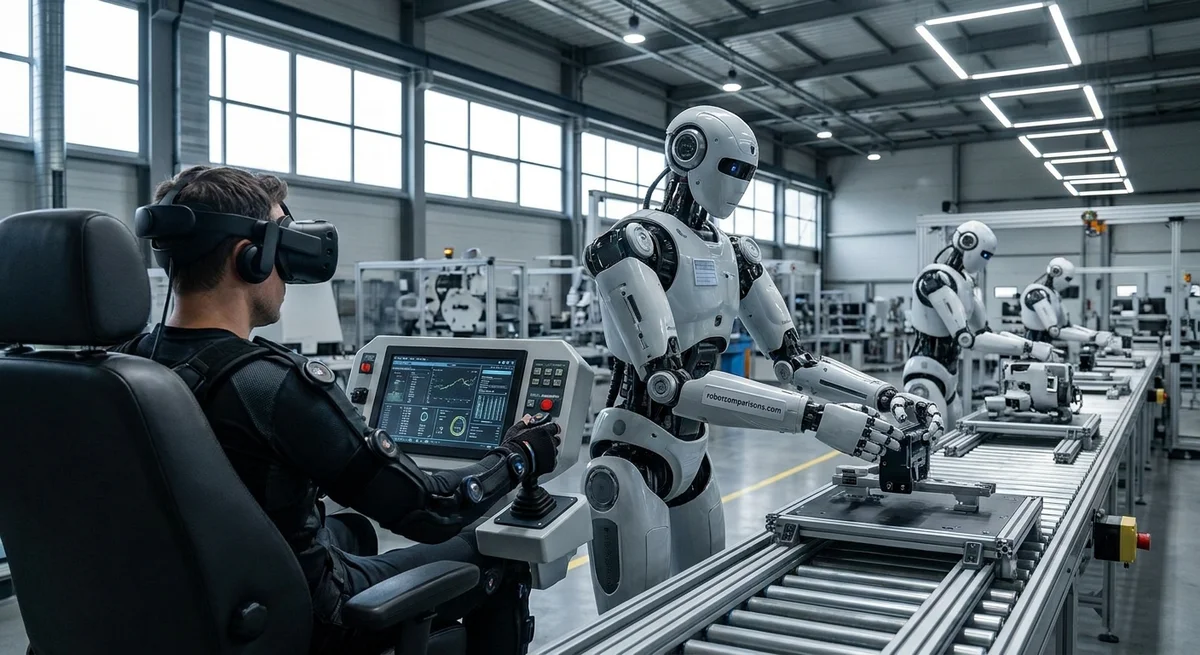
What broke: The robots still struggle with unexpected situations. For example, Figure’s folding-demo robot got “hang-ups” when a towel snared on a basket (time.com) (see below). A key lesson is that any mechanical or sensing glitch may require a human to intervene immediately. In one BMW pilot stage, engineers had to run the test in a “faux kitchen” environment with operators in VR suits tidying up each time the robot failed (time.com).
Training and integration: Like in logistics, factory robots have long ramp-up times. German press notes BMW will start its Leipzig pilot in summer 2026 after a year of lab tests (cincodias.elpais.com). Changes to the workflow can be complex: companies often add robots on wheels or rails so they can move around old line layouts (cincodias.elpais.com). Workers usually need safety training and new procedures. BMW’s execs say the process is “milestone-based,” adding one capability at a time (www.axios.com). Generally, automakers plan multi-year projects to integrate humanoids, with engineers from both sides figuring things out step by step.
Retail: Store and Customer Service Robots
Some retailers and tech demos are trying humanoids in customer-facing roles. For example, at Nvidia’s GTC 2026 conference a startup called Humanoid showed robots that can serve drinks and snacks in a mock store (www.techradar.com). In that demo, visitors spoke their order into a mic and two robots fetched items (a water bottle and dried mango) from shelves. The robots took about 45 seconds from start to finish, which analysts note is much slower than a human could do. They completed the order but with a glitch: one robot initially struggled to grip the water bottle, and the other even delivered an extra mango packet by mistake (www.techradar.com). (The writer jokingly called that an “extra bonus” for getting a little too generous.) This shows progress but also the reality: retail bots are functional, not perfect.
In Beijing, China has opened a public “robot store” to showcase service bots. AP News reported that one humanoid there was supposed to clear cups at a cafe, but instead it picked up a cup and then just froze, holding the cup in mid-air (apnews.com). A worker had to reset the software to recover. These experiences highlight common issues. The robots can interact with people (taking orders, carrying small items) but they often slip up in a normal work environment, requiring fallback plans.
What worked: The bots did manage to carry items and speak with customers. Voice control, simple handovers, and basic interaction are achievable now. In the demo above, the order was completed (and even gave an extra snack) (www.techradar.com). Retail kiosks or information desks using humanoids are now possible.
What broke: The biggest problems were speed and mistakes. Retail tasks often require quick action; the robots were noticeably slower than humans. Gripping failures (dropping or misplacing items) and misunderstandings can happen. In the Nvidia demo, one robot briefly gave an extra item by error (www.techradar.com). In Beijing, a robot simply didn’t know how to finish placing a cup and “froze” (apnews.com). In a store, such glitches would frustrate customers.
Training and integration: Retail staff need to be trained to supervise, bat back prints, and periodically fix robots. In these pilots, most deployment was still in a controlled demo setting, not a busy live store. As shown, companies often have engineers stand by to intervene when things go wrong (time.com). Retailers must plan for slower service and have human staff continue handling problems. Also, store layouts may need to be adjusted (give the robot space to move) since most current humanoids are fairly large.
Healthcare (Patient Experience, not Logistics)
In healthcare, humanoid robots have mostly been used for social and support roles, not carrying deliveries (that is usually done by shelf robots or carts). For example, a nursing home in the U.S. tested SoftBank’s Pepper robot to entertain and comfort elderly residents (www.axios.com). In Spain, a hospital introduced a child-sized humanoid named Saaki to talk with sick children, tell stories, and calm them during hospital stays (cadenaser.com). These roles do not involve moving medicine or laundry; instead the robot talks and gestures to soothe patients.
What worked: These robots can engage patients. Pepper told jokes and provided simple health reminders, and Saaki learned to explain procedures in gentle ways (www.axios.com) (cadenaser.com). They measure success by patient smiles and reduced anxiety rather than delivery speed. Staff report that patients respond positively to these “care companion” robots.
What broke: These healthcare robots are prone to the same software hiccups. In trials, if a robot misunderstood a question or got stuck in conversation, a nurse had to take over (www.axios.com). But by design, patients get upset if a healthcare robot fails, so engineers only run well-tested routines. Unlike logistics or manufacturing trials, there are no published KPIs like “packages moved” for healthcare; it’s judged more qualitatively on patient feedback.
Training and integration: Nurses and doctors need only minimal training to work with social robots – mostly how to start them and reset them if needed. Hospitals have set aside quiet rooms for robot trials. For now, uptake is slow and measured. One Spanish hospital says the Saaki pilot (starting in late 2025) is a research project to “open new lines of work in humanizing care” through technology (cadenaser.com). We expect precedents like this: healthcare humanoids will serve emotional needs or simple guidance, while actual supply-chain tasks continue to be done by simpler wheeled robots or staff.
Common Patterns: Training Time and Integration Complexity
Across these case studies, a few patterns emerge:
-
Long Rollout Times: Humanoid projects take years, not days. Amazon’s robotics team says a “build, test, scale” cycle is about two years (apnews.com). STMicro plans to add over a hundred robots over the next few years (www.reuters.com). BMW’s Leipzig pilot began lab tests in early 2025 and only moved to on-site trials by late 2025 (cincodias.elpais.com). In short, these are multi-year journeys.
-
Extensive Training: Companies put each robot through hundreds of hours of prep. For example, Figure AI trained its robot’s balance entirely in simulation for “hundreds of thousands of virtual hours” before ever walking in the real world (time.com). It even had engineers wear VR headsets to demonstrate tasks like folding towels, repeating the exercise dozens of times whenever the robot got stuck (time.com). Amazon chose robots that staff can “train on the job” without special degrees (apnews.com), but even then warehouse workers took weeks of on-site instruction.
-
Human-Robot Collaboration: Every successful pilot involved people helping robots. Initially, robots are fenced off or supervised for safety (as at Amazon and GXO (time.com)). When things go wrong, workers step in. In every case above, a human had to manually reset the system or move something that confused the robot (apnews.com) (time.com) (apnews.com). Companies emphasize that robots are just one part of a joint human+automation team.
-
Ease of Support: Companies are designing systems that general staff can manage. Amazon says its robots are easy to maintain, so the service team only needs “reliability maintenance engineers” (no PhD required) (apnews.com). In practice, this means adding simple interfaces and having fallback operating modes. Still, some technical staff must learn how to update the robot’s software or replace parts.
-
Unpredictable Environments: Real shops and plants aren’t as clean as labs. Amazon’s example of a storm disrupting flows (apnews.com) shows how any outside factor (like weather or human schedule changes) affects robot timing. Retail robots at a busy expo just gave up when a towel caught on a basket (time.com). The lesson is that integration testing must cover many scenarios. Pilots often run in quiet shifts or controlled demos until the system is ironed out.
Pitfalls for New Buyers (and How to Fight Them)
Bringing humanoids into your business involves new risks. Here are some common pitfalls and countermeasures:
-
Pitfall: Overhype Expectations. Humanoids still lag behind humans on speed and dexterity. (As AP News put it, early models can be “clumsy and impractical” outside of stage demos (apnews.com).) Countermeasure: Focus on specific tasks where a bipedal form really helps (like reaching high shelves or stairs). Pilot the robot on simple chores first. Don’t expect it to instantly replace a human.
-
Pitfall: Safety and Collisions. These robots are big and heavy. In tests they often work behind fences or at very slow speed. Countermeasure: Always have emergency stops and clear safety zones. Train staff on safe distances. Gradually allow the robot to share space, starting with population control algorithms (only a few machines running, out-of-the-way paths, etc.).
-
Pitfall: Training Time Underestimated. Many businesses assumed they could plug a robot in and watch it learn. Countermeasure: Be prepared to dedicate months to training — for both the robot (programming and trial runs) and people (service training and process changes). Use simulators if available, or bring in vendor trainers who wore VR in the factory demonstration (time.com).
-
Pitfall: Poor Task Fit. If a task was never done by a human in a human shape, a humanoid may not help. Many pilots discovered they should stick to chores humans already do (lifting totes, reaching into bins). Countermeasure: Analyze the workflow beforehand. Only assign robots dull, heavy, or dangerous parts of the job. Keep the planning focused on tasks where hands-on flexibility is needed.
-
Pitfall: Hard Integration. Legacy systems may not speak the robot’s language. Amazon found that its robot plans had to sync up with the warehouse schedule (apnews.com). Countermeasure: Make sure your software and sensors integrate. Start with isolated areas. Involve IT early: set up reliable communications (robot→cloud), mapping of the worksite, and fallback when the system is down.
-
Pitfall: Worker Pushback. Employees may fear for their jobs or feel uncomfortable. Countermeasure: Communicate that robots aim to take strenuous or boring tasks, not to fire people. Involve staff in the rollout: for example, Amazon partnered with a university to survey what its team wanted (apnews.com). Train employees on the new roles (Amazon says no special degree is needed to become a robot tech (apnews.com)). Highlight that these roles pay more than unskilled jobs did.
-
Pitfall: Vendor and Tech Lock-in. Many humanoid startups are young. Some may not reach mass production. Countermeasure: Don’t be the first to bet your entire operation on a single unproven robot. Use short pilot contracts, and consider more mature alternatives (like robotic arms or AGVs) for critical functions. Keep an eye on the market: for example, Amazon recently bought a small social robot company (apnews.com) but also backed away from a vacuum robot deal (iRobot) when regulators pushed back (apnews.com). This shows even tech giants hedge their bets.
-
Pitfall: Hidden Costs. Some early projects hid costs. For instance, renting a test robot at $30/hour (time.com) is fine for trials, but long-term subscriptions will add up. Countermeasure: Calculate total cost of ownership, including downtime when the robot fails. Seek transparent contracts. Ask for case studies (GXO is one that paid per hour and reported success (time.com)). Plan for electricity, maintenance, space occupancy, software updates in your budget.
By planning carefully and learning from these early projects, new buyers can avoid common traps. The key is to start small, test thoroughly, and keep humans in the loop. Early adopters are teaching us that humanoid robots can eventually help with heavy lifting and simple tasks, but they are not plug-and-play. When problems come up, the teams in these pilots applied quick fixes (like reset commands or manual overrides) and iterated their software. Document each step and share feedback with the robot maker.
Conclusion
The first real-world uses of humanoid robots in 2026 have taught us that these bots can work – especially at lifting and carrying in human environments – but they also break in surprising ways. Workers often have to intervene, reset tasks, or adapt the process around a robot’s limitations. Training a robot requires both lots of human help (people showing it what to do) and many hours of simulated practice. Integration is complex: most pilots took many months or years, and usually only after solving safety and workflow issues could the robots perform reliably. New buyers should therefore proceed with both excitement and caution.
Thinking about a purchase? Focus on clear KPIs: track exactly what you want the robot to improve (faster order lines, fewer injuries, etc.) and measure progress. Use gradual pilots – maybe one shift or one area – so you can spot “what breaks” early. Above all, always have a plan B for any hiccup, whether that’s extra products on the shelf, extra staff on hand, or stop-the-line buttons if the robot gets stuck. With patience and smart planning, these case studies show that early adopters are learning to tame humanoid robots and reap some benefits. The jobs may evolve (as Amazon notes, they expect new jobs with new skills (apnews.com)), but combining people and robots appears to be the winning strategy for now.
Never Miss a Robot Breakdown
Get deep research, head-to-head robot comparisons, and industry analysis delivered straight to your inbox — multiple times a week, completely free.