Compliance Control
compliance control
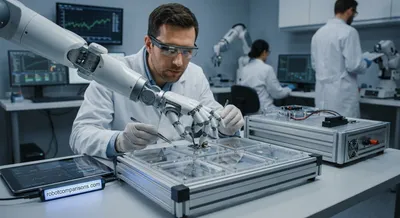
Dexterity and Manipulation in 2026: Assessing Fine Motor Skills and Tool Use
Robots must master several precision tasks, often seen in manufacturing or daily life:
Compliance Control
Compliance control is a way to make machines change how stiff or soft they act when they touch things. Instead of holding a fixed position like a rigid motor, a device using compliance control can give a little or push back depending on forces it feels. This approach uses sensors and software to measure force and then adjust the motors so the machine behaves more like a flexible arm than a locked one. Two common styles are impedance control, which sets how much the robot resists movement, and admittance control, which decides how much it moves when pushed. Those details matter mostly behind the scenes; to a user it means safer and smoother interactions. Compliance control matters because it helps robots handle delicate objects without crushing them and lets them safely share space with people. It helps when a tool must slide into a tight place or when a hand needs to compensate for small errors in position. Robots with good compliance control can adapt to uncertain surfaces, recover from small collisions, and keep tasks going even when things are not perfectly aligned. This makes machines more useful in real workplaces where everything is not perfectly predictable and where safety and finesse are important. As sensors and software improve, compliance control is a key feature that brings robots closer to working naturally around people and objects.
Never Miss a Robot Breakdown
Get deep research, head-to-head robot comparisons, and industry analysis delivered straight to your inbox — multiple times a week, completely free.