Sim-to-real
sim-to-real
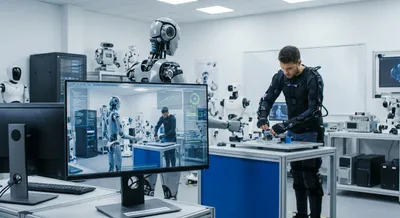
Training Data, Simulation, and Digital Twins: How 2026 Humanoids Learn Your Tasks
Robots often start by learning from humans. One common method is Learning from Demonstration (LfD). That means a person performs a task (say picking...
Sim-to-real
Sim-to-real refers to the process of taking a system trained in simulation and making it work reliably in the physical world. Simulators let researchers test ideas quickly, cheaply, and safely, but they are always imperfect: sensor noise, subtle physics, and real-world messiness can differ from the simulated version. That gap can cause systems that perform well in simulation to fail when exposed to real conditions. Closing that gap often involves methods such as varying the simulator during training, adding realistic noise, or fine-tuning models with a smaller amount of real data. The goal is to preserve the benefits of simulation — speed, low cost, and safety — while ensuring the trained system behaves correctly outside the virtual environment. This process is important for robotics, self-driving vehicles, and any application where testing directly in the real world is expensive or dangerous. Success requires careful validation and sometimes hardware-specific adjustments, because even small mismatches can lead to big performance drops. When done well, sim-to-real makes it practical to deploy complex, learned systems in everyday settings.
Never Miss a Robot Breakdown
Get deep research, head-to-head robot comparisons, and industry analysis delivered straight to your inbox — multiple times a week, completely free.