Flexible Objects
flexible objects
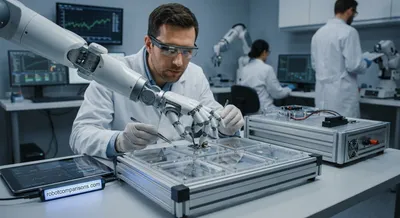
Dexterity and Manipulation in 2026: Assessing Fine Motor Skills and Tool Use
Robots must master several precision tasks, often seen in manufacturing or daily life:
Flexible Objects
Flexible objects are things that bend, stretch, or change shape easily when you touch or move them, such as cloth, cables, rubber tubing, food, and soft plastic. Unlike rigid parts, these items do not keep a fixed form, so their shape and position can shift with gravity, handling, or contact forces. That variability gives them useful properties like folding, cushioning, and compressing, but it also makes their behavior harder to predict and control. When you pick up or move a flexible object, small changes in where you hold it or how you apply force can lead to big changes in its shape and motion. Because of that, working with flexible items requires different techniques than working with stiff parts. Flexible objects matter in many everyday and industrial situations—folding laundry, routing cables, packaging soft goods, and medical procedures all involve flexible materials. For machines and robots, these items pose special challenges in sensing, planning, and control because they require models that account for deformation and internal dynamics. Solutions include soft grippers that conform to shapes, vision and tactile sensing to track motion, tension control strategies, and physics-based or learning models that predict how the object will move. Improving how we handle flexible objects makes automation more capable and reliable, and it opens up new possibilities in manufacturing, healthcare, and home robotics.
Never Miss a Robot Breakdown
Get deep research, head-to-head robot comparisons, and industry analysis delivered straight to your inbox — multiple times a week, completely free.