Dexterity
dexterity
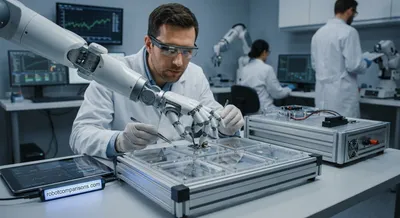
Dexterity and Manipulation in 2026: Assessing Fine Motor Skills and Tool Use
Robots must master several precision tasks, often seen in manufacturing or daily life:
Dexterity
Dexterity is the ability to use hands, tools, or manipulators with precision, coordination, and control. For people, it depends on muscles, nerves, and the brain working together to perform fine movements like writing, buttoning clothes, or handling small parts. For machines, dexterity means having grippers, sensors, and control systems that can grasp, move, and orient objects accurately. High dexterity enables tasks that need delicate force, exact positioning, or quick adjustments, such as assembling small components or performing delicate procedures. It matters because many everyday activities and skilled jobs rely on fine motor control rather than just raw strength or speed. Improving dexterity can boost independence, job performance, and safety through training, rehabilitation, or better tool design. In robotics, achieving human-like dexterity is difficult and requires precise sensing, fast feedback, and smart algorithms to cope with uncertainty. Engineers and healthcare professionals measure dexterity by testing speed, accuracy, grip strength, and the ability to use tools or adapt to new objects. Progress in dexterity for people and machines opens up new possibilities, from improved assistive devices to more capable automated systems. Ultimately, dexterity is about control and finesse, allowing complex tasks to be done reliably and with minimal error.
Never Miss a Robot Breakdown
Get deep research, head-to-head robot comparisons, and industry analysis delivered straight to your inbox — multiple times a week, completely free.