Domain Randomization
domain randomization
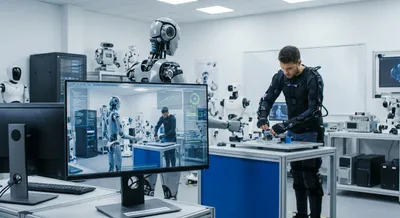
Training Data, Simulation, and Digital Twins: How 2026 Humanoids Learn Your Tasks
Robots often start by learning from humans. One common method is Learning from Demonstration (LfD). That means a person performs a task (say picking...
Domain Randomization
Domain randomization is a training trick that intentionally varies simulation details so a system learns to handle a wide range of appearances and behaviors. Instead of making a simulator perfectly realistic, developers randomly change things like lighting, colors, textures, object shapes, camera angles, and even physical properties during training. The idea is that if a model sees enough variety in simulation, the real world will just look like another variation and the model will generalize better. This approach is especially useful for vision and robotics systems that need to work outside of perfectly controlled conditions. It matters because collecting and labeling real-world data is expensive, slow, and sometimes risky, so building broader generalization in simulation can save time and resources. Domain randomization can reduce the mismatch between simulated and real environments, making transfer more reliable. On the downside, choosing which aspects to randomize and how much variation to use requires care, since too little randomness leaves brittleness and too much can prevent learning. Practical use often combines this technique with some real-world fine-tuning to get the best results.
Never Miss a Robot Breakdown
Get deep research, head-to-head robot comparisons, and industry analysis delivered straight to your inbox — multiple times a week, completely free.