Tactile Feedback
tactile feedback
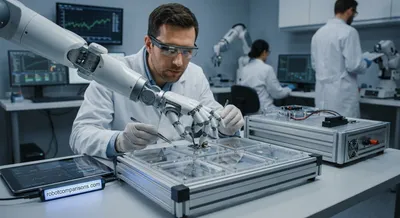
Dexterity and Manipulation in 2026: Assessing Fine Motor Skills and Tool Use
Robots must master several precision tasks, often seen in manufacturing or daily life:
Tactile Feedback
Tactile feedback is the sense of touch provided by a device that tells you about contact, pressure, texture, or movement. In machines, this means sensors and systems that detect when and how something is being touched and then share that information with a controller or a human user. It can include simple signals like how hard a gripper is squeezing or complex signals like the pattern of tiny vibrations from a surface. Some systems convert those signals into feelings you can sense through a wearable or a screen, while others use the data internally to change how the machine behaves. Tactile feedback matters because touch is essential for most fine manual tasks—grasping a fragile cup, feeling a button, or sensing when an object starts to slip. When machines or prosthetic devices have tactile feedback, they can adjust grip strength, prevent damage, and perform delicate manipulation with much better reliability. It also improves remote operation, so someone controlling a robot from afar can feel what the robot feels and react more naturally. Good tactile feedback reduces mistakes and makes interactions more intuitive and safer for both people and machines. As sensor technology gets smaller and smarter, tactile feedback is becoming a practical way to close the gap between human touch and machine control.
Never Miss a Robot Breakdown
Get deep research, head-to-head robot comparisons, and industry analysis delivered straight to your inbox — multiple times a week, completely free.