Robot Testing
robot testing
Training Data, Simulation, and Digital Twins: How 2026 Humanoids Learn Your Tasks
Robots often start by learning from humans. One common method is Learning from Demonstration (LfD). That means a person performs a task (say picking...
Robot Testing
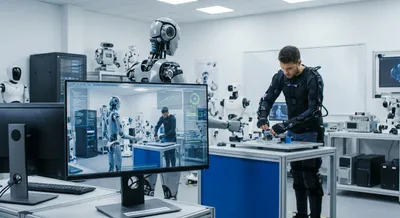
Robot testing is the process of checking how well a robot performs its tasks, behaves safely, and handles different real-world conditions. It covers both the physical parts like sensors and motors and the software that controls decisions and movement. Tests can happen in controlled labs, in real environments, or inside computer simulations that mimic reality. Engineers run repeatable scenarios, collect data, and look for failures, anomalies, or unexpected behavior. This work also examines safety systems to make sure the machine protects people and property during normal use and when problems occur. Robot testing matters because robots are increasingly used in factories, hospitals, homes, and public spaces, and mistakes can be costly or dangerous. Thorough testing reduces surprises, improves performance, and builds trust for users and regulators. It helps developers refine algorithms, tune controls, and confirm that updates don’t break existing capabilities. Combining hands-on experiments with virtual simulations lets teams find rare problems faster and at lower cost. In the end, good testing makes robots more reliable, safer, and more useful for everyday tasks.
Never Miss a Robot Breakdown
Get deep research, head-to-head robot comparisons, and industry analysis delivered straight to your inbox — multiple times a week, completely free.