Teleoperation
teleoperation
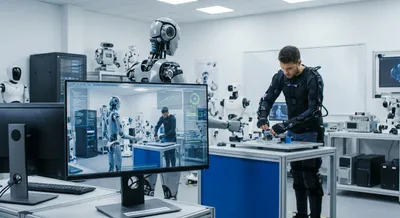
Training Data, Simulation, and Digital Twins: How 2026 Humanoids Learn Your Tasks
Robots often start by learning from humans. One common method is Learning from Demonstration (LfD). That means a person performs a task (say picking...
Teleoperation
Teleoperation means controlling a machine or device from a distance, using a human operator who sends commands and receives feedback remotely. It can involve simple controls, like steering a camera from across the room, or complex setups with joysticks, screens, and force feedback that let the operator feel what the device touches. This approach is often used when direct human presence would be dangerous, impractical, or impossible — for example, in deep-sea work, space missions, or handling hazardous materials. Key challenges include communication delays, limited sensory information, and making controls intuitive so the operator can act quickly and accurately. To overcome these limits, systems may use cameras, sensors, haptic feedback, and predictive displays that fill in missing details. Teleoperation lets skilled people extend their abilities to places and tasks they couldn’t reach otherwise, improving safety and capability. It also supports training and supervision of automated systems, allowing a human to step in when needed. Overall, teleoperation connects human judgment with remote machines to solve problems in risky or distant environments.
Never Miss a Robot Breakdown
Get deep research, head-to-head robot comparisons, and industry analysis delivered straight to your inbox — multiple times a week, completely free.