Grippers
grippers
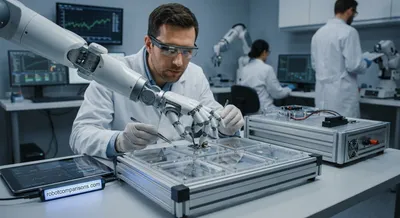
Dexterity and Manipulation in 2026: Assessing Fine Motor Skills and Tool Use
Robots must master several precision tasks, often seen in manufacturing or daily life:
Grippers
Grippers are the parts of a machine or tool that actually touch, hold, and move objects. They can be simple, like two metal jaws that close around an item, or more complex, like soft robotic fingers, suction cups, or multi-finger hands that mimic a human grasp. Some are made for strength and repeatability, while others are built to be gentle and adaptive so they can handle fragile or oddly shaped things. Many grippers include sensors to feel pressure, slip, or contact, which helps them adjust in real time and avoid dropping or crushing what they hold. In short, a gripper is the interface between a manipulator and the world, and its design determines what the system can pick up and how well it can do it. Grippers matter because they set the limits on what tasks a robot or device can perform safely and reliably. The right gripper reduces damage to delicate items, speeds up production lines, and makes machines safer to work alongside people. Designing an effective gripper involves choices about shape, materials, force control, and sensing, as well as how it is programmed and powered. Recent advances in soft materials, tactile sensors, and learning-based control have expanded the range of items machines can handle. Good gripper design is essential for automation, prosthetics, service robots, and any situation where objects must be handled precisely and consistently.
Never Miss a Robot Breakdown
Get deep research, head-to-head robot comparisons, and industry analysis delivered straight to your inbox — multiple times a week, completely free.