Robot Certification
robot certification
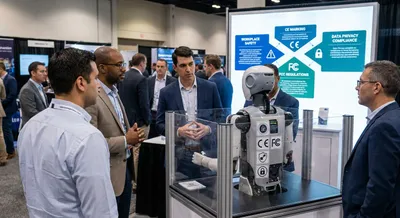
Regulatory Landscape in 2026: Workplace Safety, CE, FCC, and Data Privacy for Humanoids
In the EU, robots are treated as “machines” under law. New robots must meet the EU Machinery Directive (currently 2006/42/EC) and carry the CE mark...
Robot Certification
Robot certification is a formal process that checks whether a robot meets specific safety, performance, and technical standards before it is sold or used. Certification usually involves testing by trained professionals and reviewing documentation to make sure the robot behaves as promised and does not create undue risks. Certified robots often carry a label or certificate that signals compliance to customers, employers, and regulators. The process can cover physical safety, electrical and electromagnetic compatibility, software reliability, and protections for user data. Getting a robot certified helps manufacturers enter markets and reduces legal and financial risks by showing they followed recognized rules. Certification can also improve user confidence and make it easier for companies to procure and deploy robots in workplaces. Because standards change as technology evolves, certification may need updates or re-evaluation over time. Independent testing bodies or labs commonly perform assessments, but some regions allow self-declaration when appropriate safeguards are in place. Overall, certification is a key step in turning a prototype into a trusted tool that can be used safely and effectively in the real world.
Never Miss a Robot Breakdown
Get deep research, head-to-head robot comparisons, and industry analysis delivered straight to your inbox — multiple times a week, completely free.