Functional Safety
functional safety
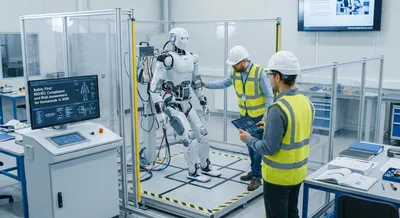
Safety First: ISO/IEC Compliance and Risk Assessment for Humanoids in 2026
Step-by-step risk assessment per ISO 12100 includes: Define boundaries and usage. First decide how, where and when the robot will operate. Specify...
Functional Safety
Functional safety means that safety-related systems do what they are supposed to do to prevent or reduce harm when things go wrong. It focuses on automatic responses — like stopping a machine or switching to a safe mode — rather than relying only on people to notice and act. Safety functions are designed to detect faults or dangerous conditions and take reliable action to keep people and equipment safe. Achieving functional safety involves careful design, testing, diagnostics, and maintenance so failures are rare and controlled when they occur. The field uses defined performance targets that tell engineers how reliable the safety function must be and how often checks should run. Functional safety matters because modern systems are complex and can fail in unexpected ways, and automatic safeguards reduce the chances those failures lead to harm. It is especially important in machines, vehicles, medical devices, and industrial control systems where human lives and large costs are at stake. Applying functional safety practices improves trust in products, supports legal compliance, and lowers the risk of accidents and expensive recalls. It also emphasizes clear responsibility across design, production, and maintenance so safety stays effective throughout a product’s life. In short, functional safety turns safety requirements into reliable technical solutions that work even when parts fail.
Never Miss a Robot Breakdown
Get deep research, head-to-head robot comparisons, and industry analysis delivered straight to your inbox — multiple times a week, completely free.